About Tendra Hand
The project
A robot that can cook, clean and use tools as well as a person. That is where Tendra Hand is heading, and it starts with a hand as capable as yours. Built step by step, in the open.
- 20joints in the full hand
- 5big steps to a robot at home
- 2hands on the first robot
- 100%open source
Why this matters#
Think about everything you did with your hands today. Made breakfast. Opened a door. Typed, tied, poured, carried. We don't notice it, but our hands do thousands of small, skilled things every day.
Robots can't do most of them yet. They are strong and precise in factories, where every part arrives in the same place every time. But a kitchen or a living room changes every minute, and the hardest part to get right is the hand.
Tendra Hand is aiming for the whole thing: a robot that can do what people do, just as well. Not only pick things up, but understand a task like "make a sandwich", break it into steps and carry them out. The hand comes first, because without a capable hand nothing else works.
The ideas behind it#
Tendons
Built like a human hand
Your finger muscles sit in your forearm and pull on long cords. Tendra Hand works the same way, so the fingers stay slim and the motors stay out of the way.
Dexterity
Free joints, real skill
Many robot hands curl a whole finger with one motor. Tendra gives almost every joint its own, so it can pinch, hold and roll things the way you do.
AI
Learn in simulation first
A virtual copy of the hand can practise millions of times without breaking anything. The skills it learns there are meant to carry over to the real one.
Open
Made to be rebuilt
The parts print on an ordinary 3D printer, and the same code runs the simulated hand and the real one. Anyone can make a copy and try their own ideas.
Where we are#
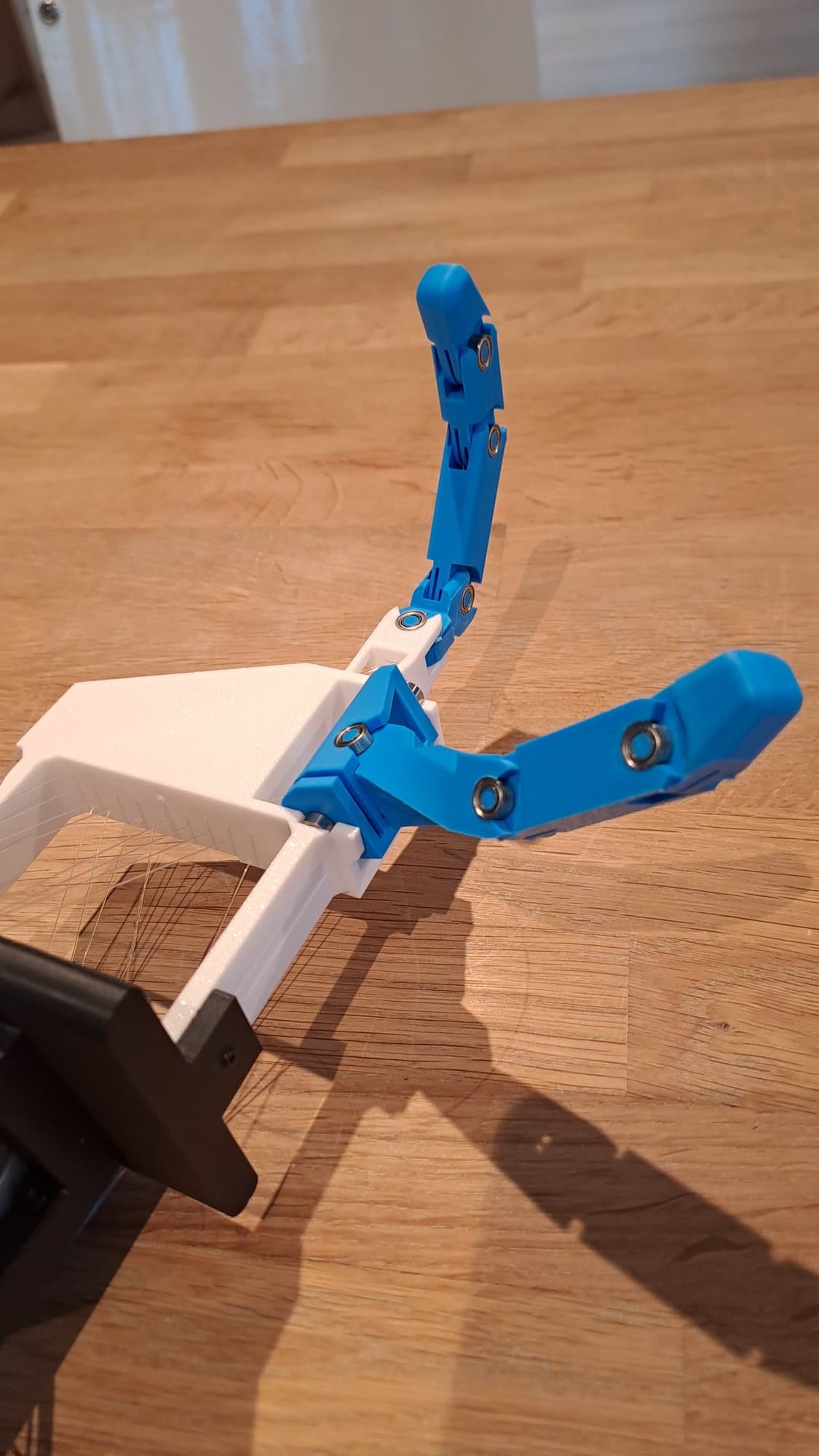
It's early, and we'd rather say so. A thumb and index finger prototype is built and being brought to life. The full five-finger hand, with 20 joints, is designed and moves in simulation, where it is also learning to pick things up. Nothing has been tested on the full real hand yet. Follow each step in the build log.
Roadmap#
- In progress
Step 1: A hand as capable as ours
Five fingers and 20 joints that can pinch, grip and turn things the way a human hand does.
- Planned
Step 2: Senses
Touch in the fingertips and eyes on the world, so it can feel and see what it holds.
- Planned
Step 3: Learned skills
Skills learned from practice and from people: pouring, cutting, folding, using tools.
- Planned
Step 4: Understanding tasks
Ask for something in plain words, and it plans the steps and carries them out.
- Planned
Step 5: At work in a real home
Two arms and two hands helping with cooking and chores, safely, around people.
Open, so others can go further#
Everything is shared: the 3D design, the printable parts, the code, the simulation and the research notes, including the ideas that didn't work. Use it to learn how a robot hand works, borrow an idea for your own project, or build something better on top of it. Commercial use is welcome too; the details are in the licenses on GitHub.
Have an idea or a question? Get in touch.