The journey
Building a hand that can do what ours can.
A robot that cooks, cleans and uses tools needs hands as capable as ours. This is how far we have come, and where we are going next.
- Step 1: A hand as capable as oursWe are here
- Step 2: Senses (coming up)
- Step 3: Learned skills (coming up)
- Step 4: Understanding tasks (coming up)
- Step 5: At work in a real home (coming up)
Where we are
Step 1 of 5: the hand.
The first prototype works and the full hand is designed. Right now it is learning to grasp in simulation. Next, we build it for real.
- First prototype builtDone
- Full hand designedDone
- Learning to grasp in simulationNow
- Full hand builtNext
- Grasping in the real worldNext
What we have built
Four big steps so far.
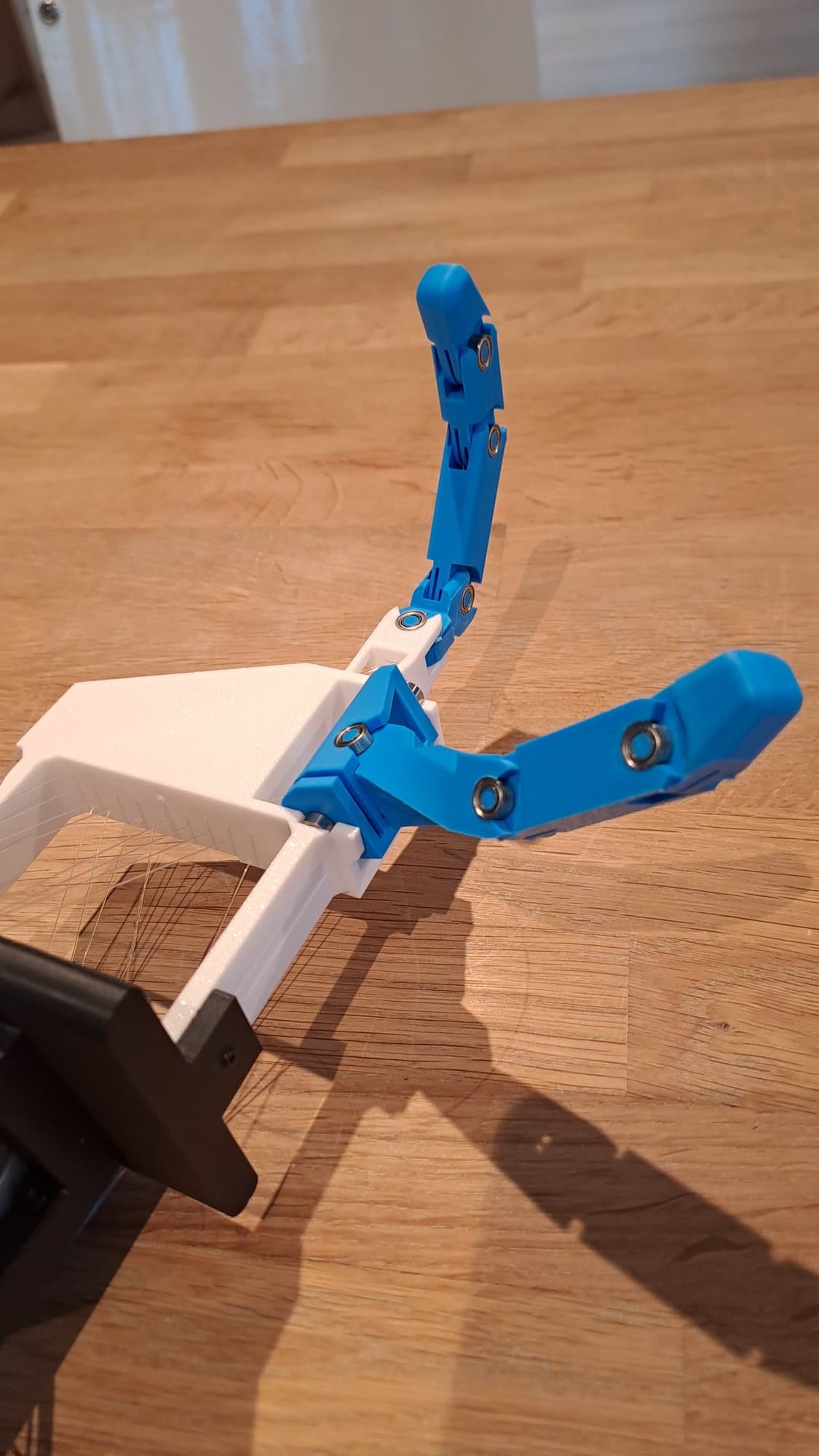
The first hand
A 3D-printed thumb and index finger, moved by tendons the way your muscles move your fingers.
- 8 joints, each moved by its own motor
- Tendons cross every joint on its axis, so moving one joint never pulls another
- Nothing moves until it is told to: safe from the first line of code
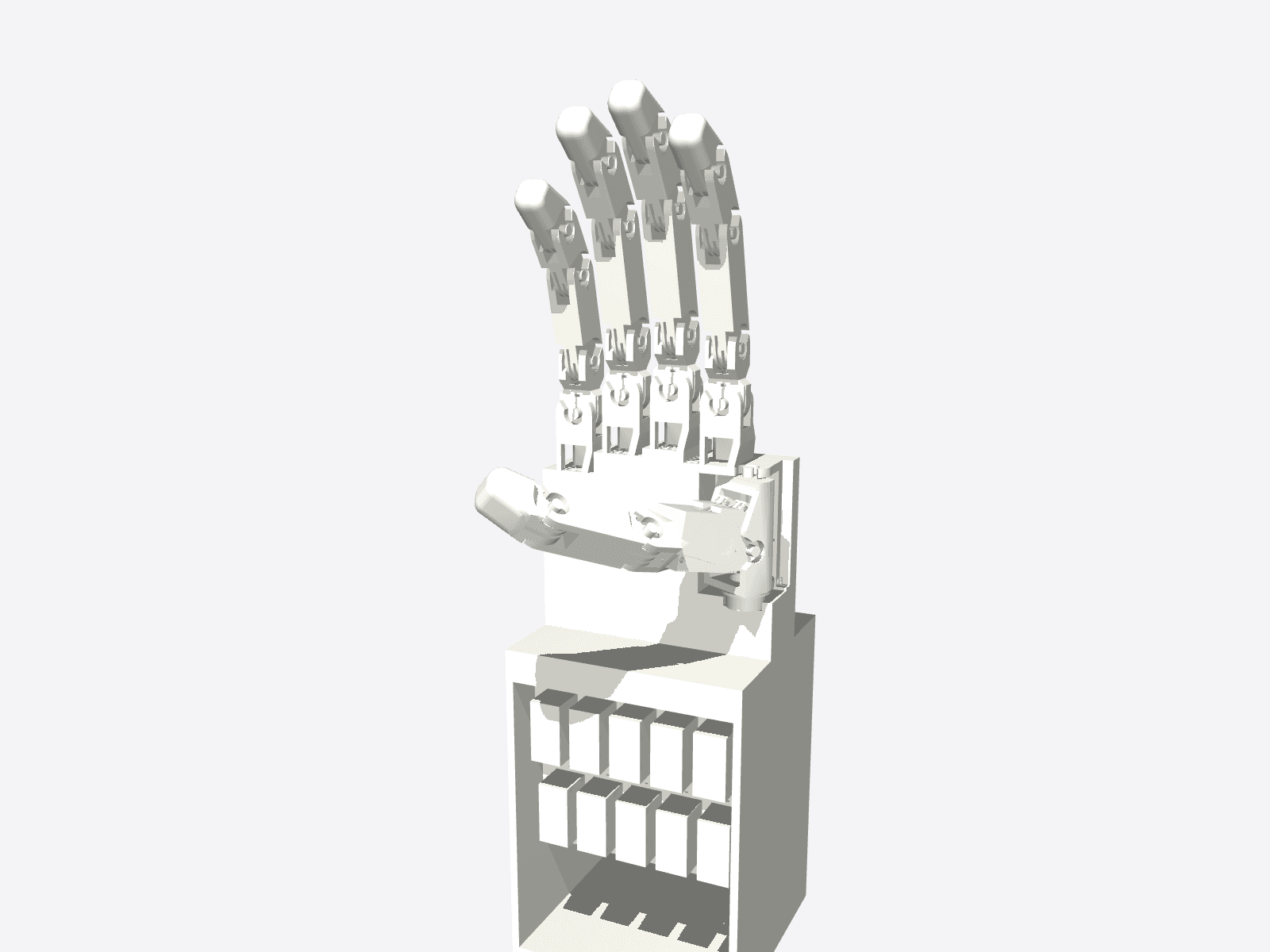
A full hand, designed
Five fingers and 20 joints. The motors sit in the forearm, just like the muscles of a human arm.
- 20 joints moved by 16 smart motors that know where they are
- A small rigid bar bends each fingertip together with the middle joint, as in your own finger
- Every tendon has its own channel through the palm and the wrist
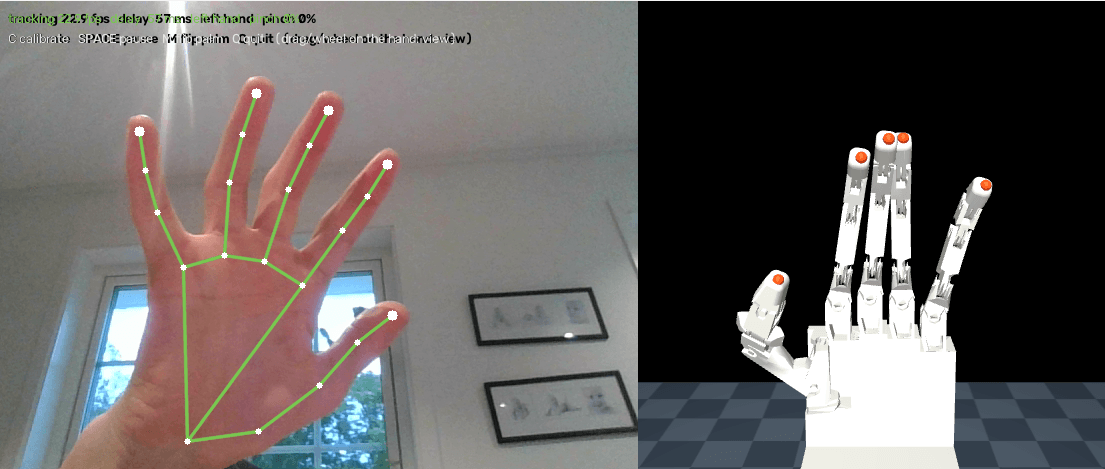
A digital twin
A simulated copy of the hand that behaves like the real one, so we can try ideas in minutes instead of days.
- Physics for every joint and tendon
- Copies your hand live from an ordinary webcam
- Two arms with two hands: the first robot body
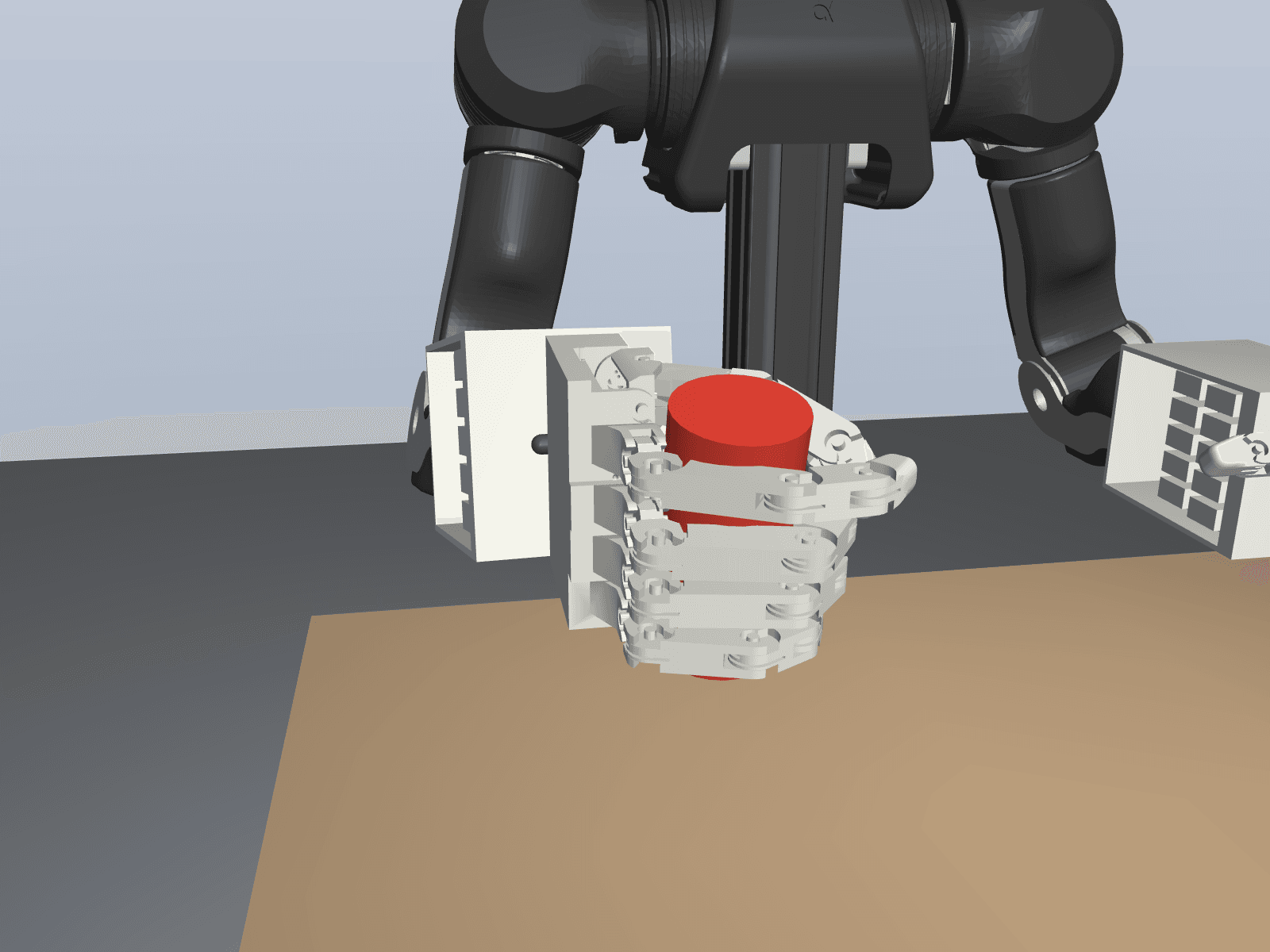
Learning to grasp
The hand teaches itself to pick things up, by trial and error, thousands of times over in simulation.
- 77% of grasps succeeded after 49 minutes of practice
- Training on cloud GPUs, with both arms
- Now: calm, steady movements instead of shaky ones
What we learned
Ideas we dropped, so you don't have to try them.
Every mistake is written down. Here are the ones that taught us the most.
We tried: One motor for every joint
Twenty-one motors needed a huge power supply and left no room in the forearm for the tendons.
LessonCount the power and the space before you count the joints.
We tried: Cheap motors that can't feel their position
Someone had to straighten the hand by hand before every start.
LessonA motor that knows where it is is worth paying for.
We tried: A tendon to bend the fingertip
Tendons stretch and go slack, and the fingertip has no motor of its own to pull the slack out.
LessonWhen nothing can take up slack, use something stiff.
We tried: Rewarding the AI for reaching the goal
It learned to hover just short of the goal, because reaching it ended the game and the points.
LessonCheck what your reward really pays for, not what you meant it to.
What's next
Build the full hand, and let it grasp for real.
After that come touch and sight, learned skills, and a robot that understands what you ask.